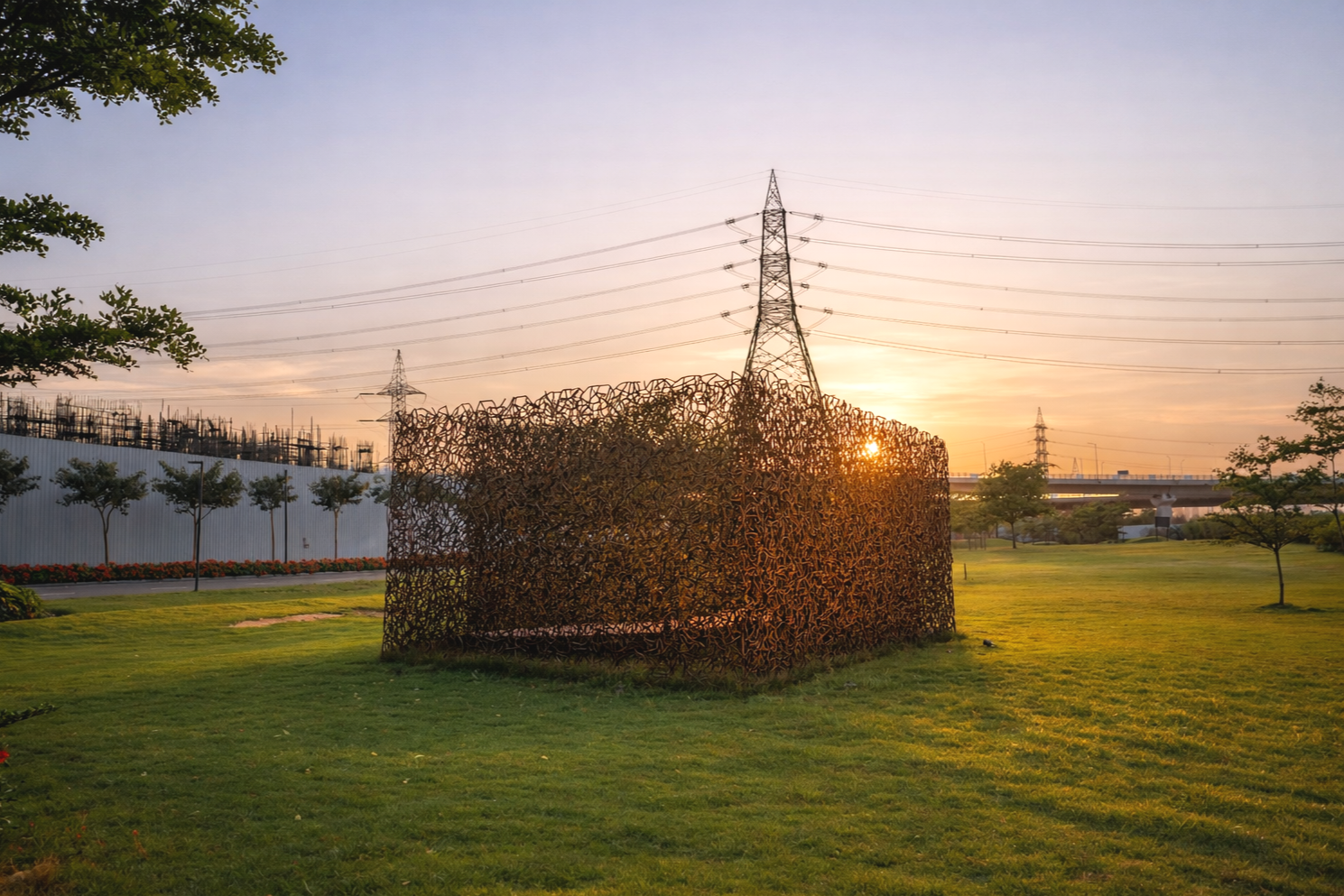
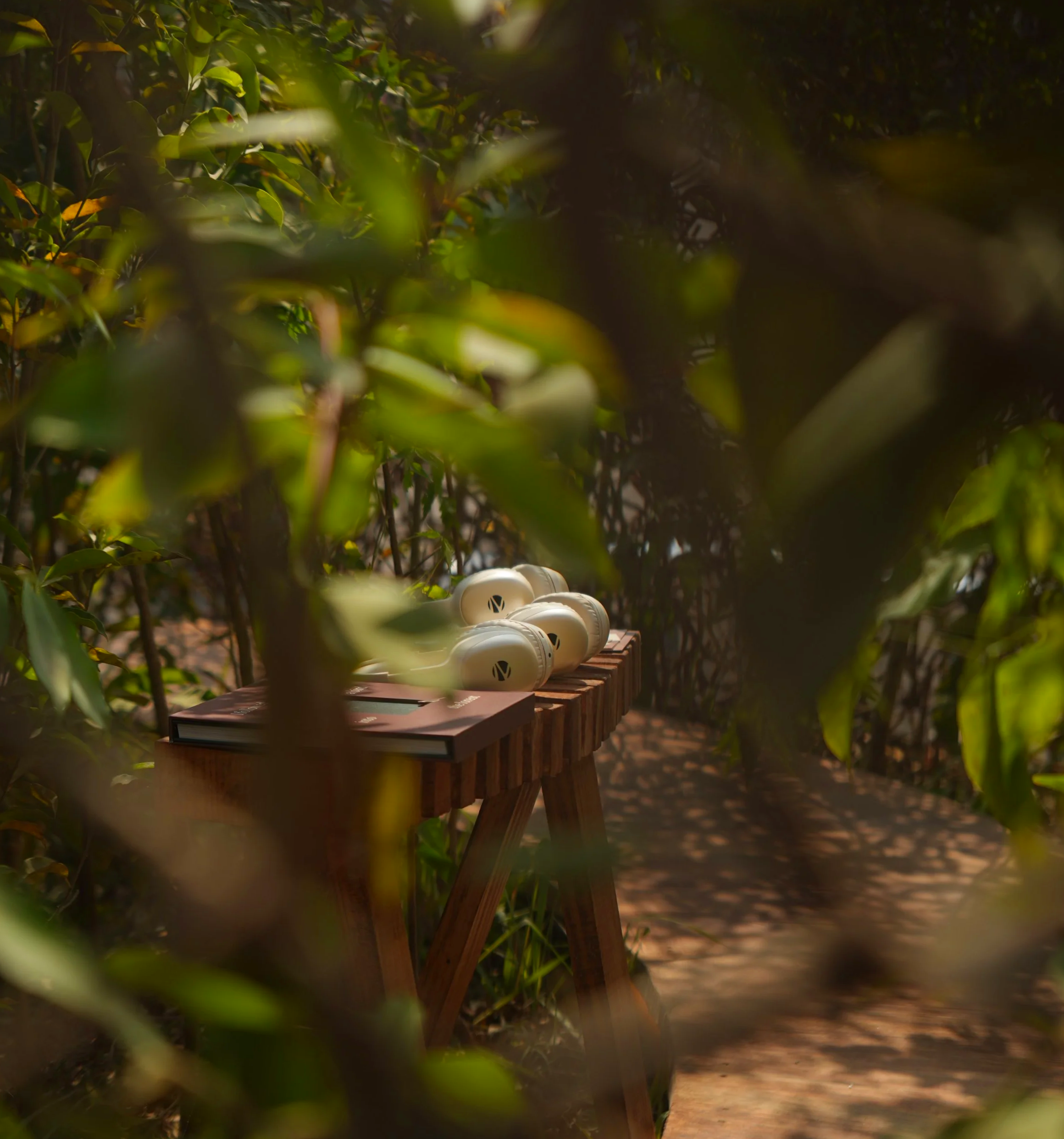
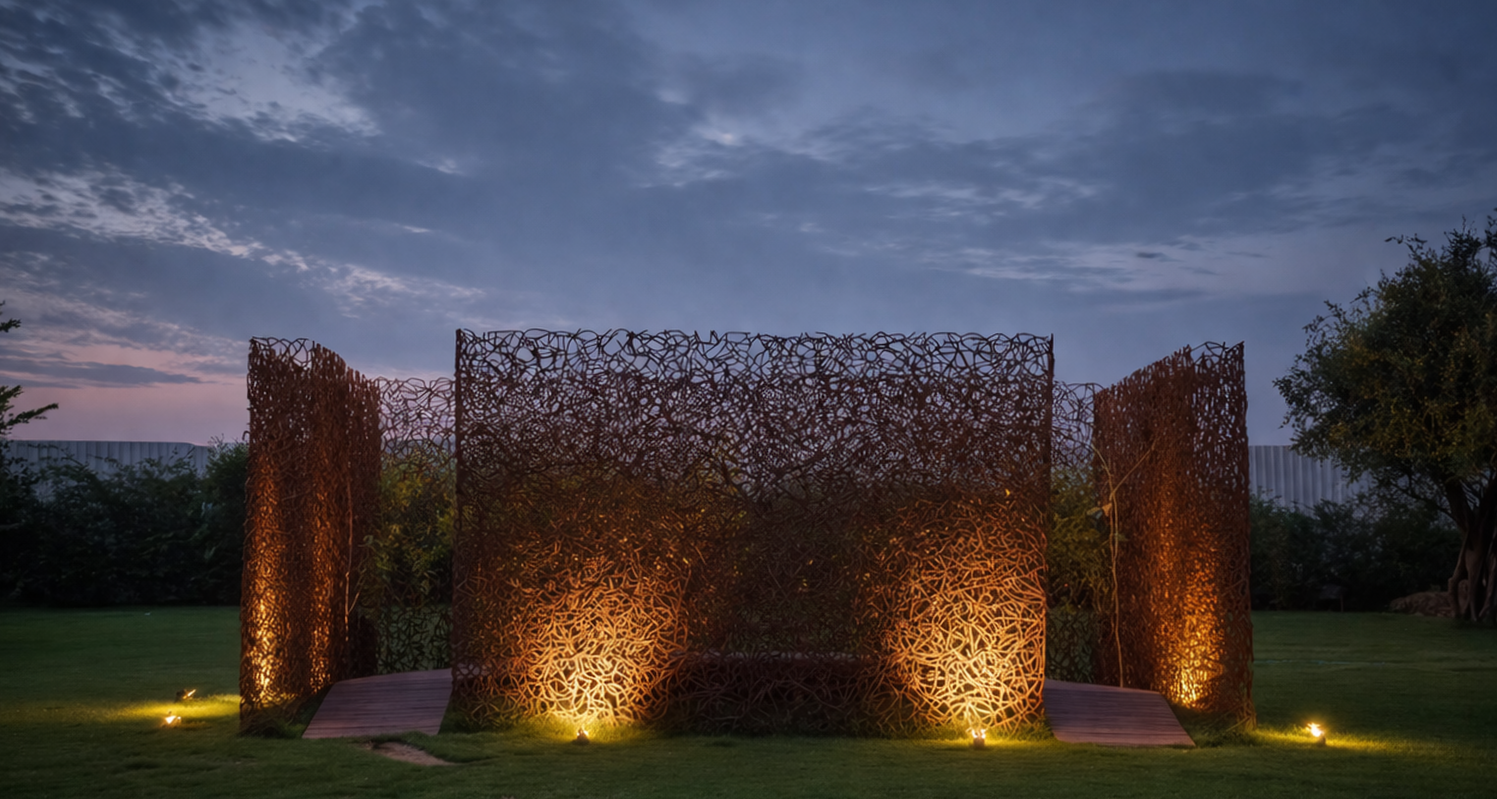
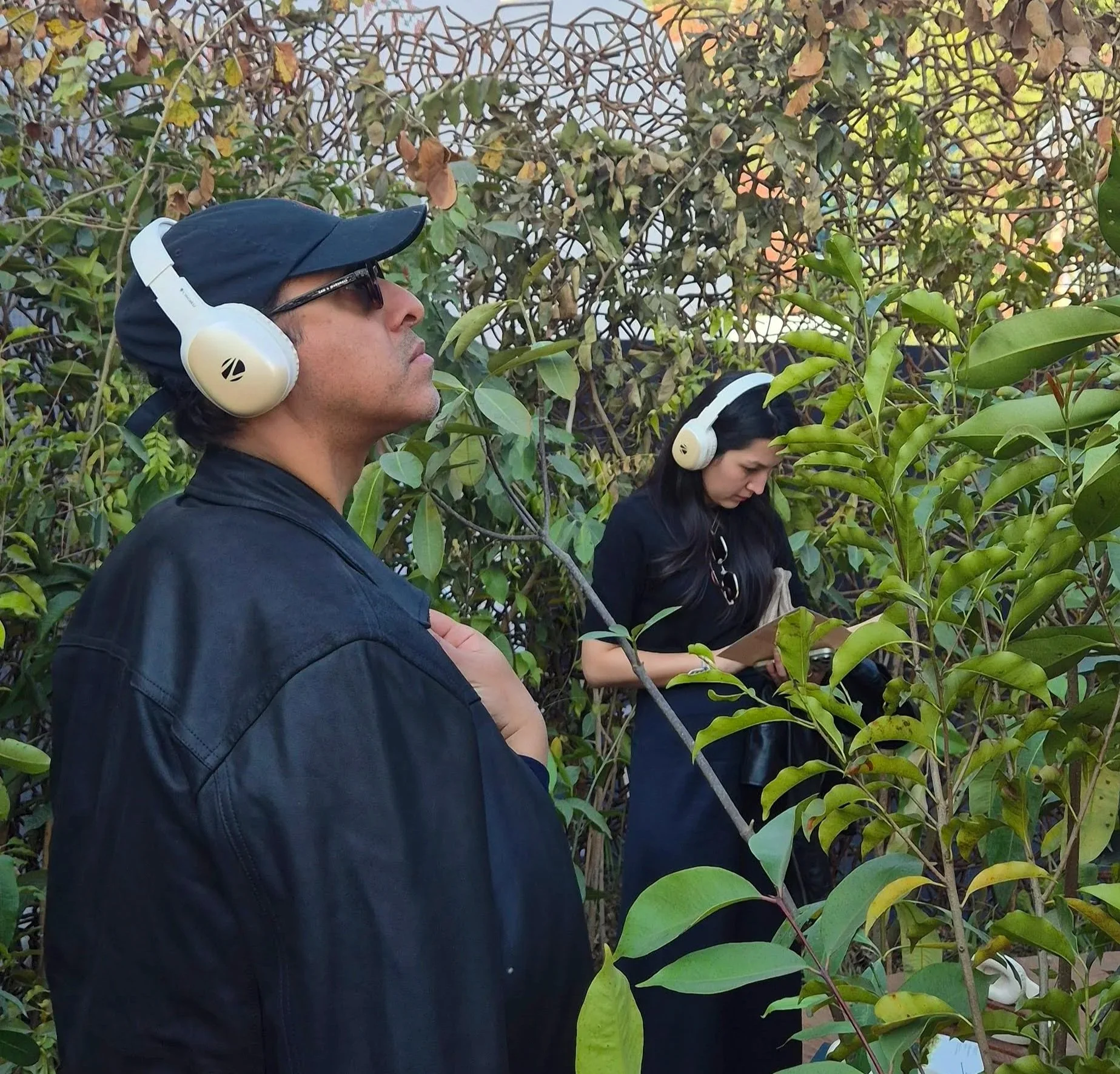

FOREST II is a Miyawaki-inspired pocket forest, composed of over 200 native trees and plants suited to Delhi’s semi-arid climate. Conceived as a small living ecosystem within a vast urban context, it is designed to evolve through dense, multi-layered planting that accelerates ecological succession, generating shade, moisture retention, and habitat within a small footprint. The forest is enclosed by a sculptural boundary formed from 10 tonnes or 20,000 individual pieces of reclaimed construction metal from Max Estates’ developments. During the exhibition period, black grass functions as a temporary ground cover to retain soil moisture for young saplings and will be replaced by native species as the forest is planted and begins its long-term establishment.
Waste Construction Metal, Soil, Native Plant Species and continues to grow.
7×5×3.20m
For India Art Fair commissioned by Max Estates
FLORA
Vegetation is organised into layered strata of canopy, understory, and groundcover, forming the basis of a self-supporting forest system. Species include Amaltas (Cassia fistula), Arjun (Terminalia arjuna), Jamun (Syzygium cumini), Neem (Azadirachta indica), Maulsari (Mimusops elengi), Pongamia (Pongamia pinnata), Desi Mango (Mangifera indica), Kachnar (Bauhinia variegata), Jarul (Lagerstroemia speciosa), Cordia (Cordia dichotoma), Karonda (Carissa carandas), and Lemongrass (Cymbopogon spp.), alongside grasses. Planted closely, these species are expected to promote rapid growth, soil regeneration, and microclimate cooling. Neem and Pongamia contribute to natural pest resistance and soil enrichment; Arjun and Jamun support long-term carbon sequestration and wildlife; Amaltas, Kachnar, and Jarul provide seasonal flowering for pollinators; Karonda and Lemongrass stabilise soil while adding aromatic and fruiting diversity. With appropriate care during its early establishment, the forest is expected to develop increasing ecological resilience and move toward long-term self-sufficiency.
FAUNA
As the forest matures, it is anticipated to provide food, shelter, and resting space for urban wildlife. Birds such as bulbuls, sunbirds (shakkar-khora), tailorbirds (darzi chidiya), doves (fakhta), parakeets (hara tota), sparrows (gauraiya), and koels (koyal) are likely seasonal visitors. Butterflies and pollinators - including lime butterflies (nimbu titli), common mormons, grass yellows (peeli titli), plain tigers, native bees (desi madhumakhi), and carpenter bees (badi kali madhumakhi) - are expected among the earliest inhabitants, alongside insects and occasional garden lizards (girgit) or geckos (chipkali) that support nutrient cycling and ecological balance.
REGENERATION
Through dense Miyawaki planting, FOREST II grows rapidly - up to 1–1.5 m per year - forming an early canopy that cools its surroundings by 2–3 °C. A forest this size can sequester approximately 75 kg of CO₂ annually while layered vegetation, microbes, fungi, and earthworms regenerate soil, improve air quality, and create shaded urban microclimates. FOREST II asks which lives find refuge here, which migrate with the seasons, and what endures when an installation quietly becomes nature long after we step away? In becoming habitat rather than artifact, the small forest frames regeneration and home as a living memory, an ongoing process - formed by human care, multispecies presence, and sustained over time.
Realised with: Sagardeep Singh, Ankit Khurana, Botanical Bias, Virender Singh, Sumit Kumar, Tarun Mishra, Neeraj, Rakesh Kumar, Kaushik Banerjee, Saumya Saxena, Sushmita Sharma, Palak Deep Singh, Saurabh Wasson, Shiva Kumra, Fazal Ahmad Faruqi, Tanya Munjal, Pranati Kapur, Sarah Marie Fallon, Anurag Dania, Smalika Jain, Santosh Kumar Sharma, National Blind Youth Association.